Plan the journey from storage to the water before choosing your fishing kayak. A modular hull separates into shorter pieces, but every section and accessory still needs a safe place in your vehicle.
PORTL kayak section dimensions for transport and storage
Hull weights exclude accessories; a fully rigged setup also includes your seating, drives and other equipment.
| Model family / section | Approximate length × width × height (inches) | Section weight | Included in |
|---|---|---|---|
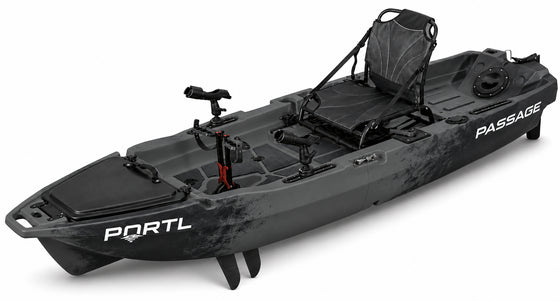
| Passage front | 59.1 × 35.8 × 13.8 in | 48.5 lb | Solo and Tandem |
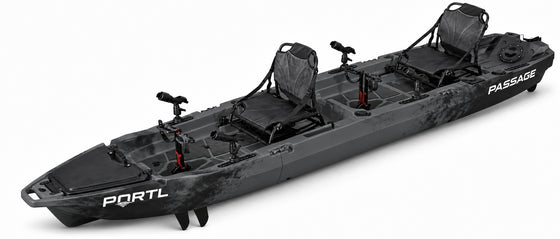
| Passage middle | 61.4 × 35.8 × 13.8 in | 50.7 lb | Tandem |
| Passage rear | 59.8 × 35.8 × 13.8 in | 47.2 lb | Solo and Tandem |
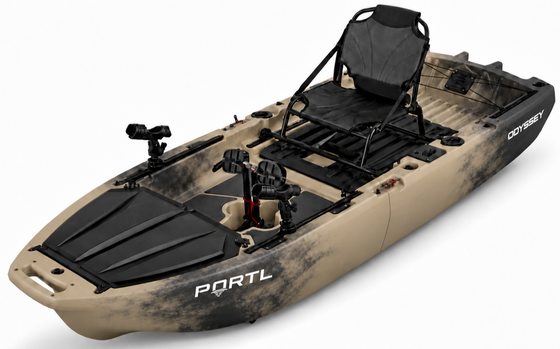
| Odyssey front | 59.1 × 39.4 × 16.9 in | 51.8 lb | Solo and Tandem |
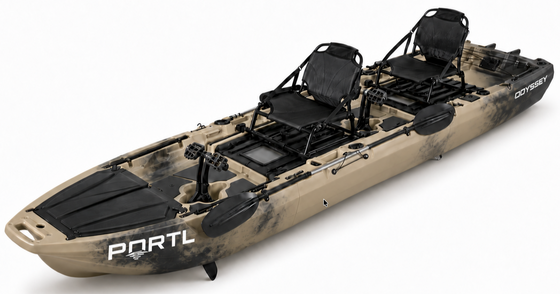
| Odyssey middle | 59.1 × 39.4 × 16.9 in | 63.9 lb | Tandem |
| Odyssey rear | 61.0 × 39.4 × 16.9 in | 59.5 lb | Solo and Tandem |
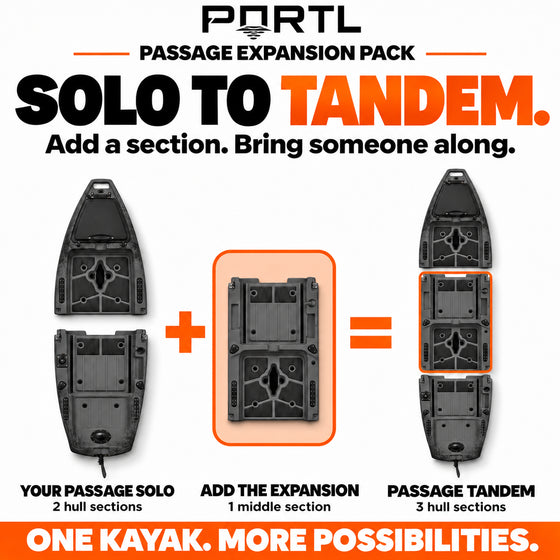
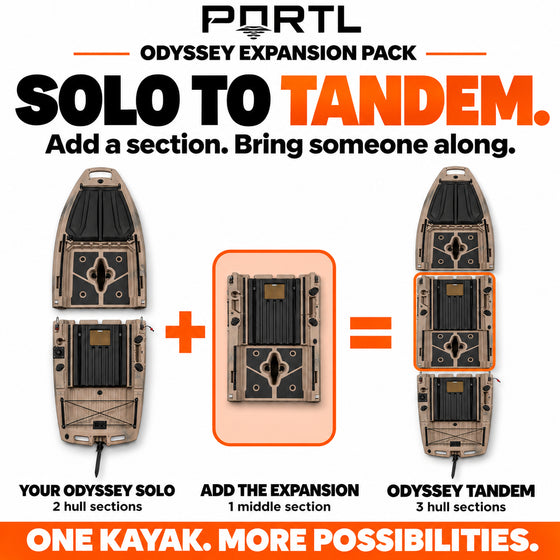
A Solo uses the front and rear sections. A Tandem adds the matching middle section. These are individual hull dimensions, not the dimensions of a shipping carton or a combined stack.
What the dimensions mean for your car
Passage sections are 35.8 in wide and 13.8 in high; Odyssey sections are 39.4 in wide and 16.9 in high. Odyssey therefore needs 3.5 in more width and 3.1 in more height in a straight, similarly oriented loading arrangement. Allow clearance to handle the hull rather than relying on an exact-size opening.
The longest Passage Solo section is 59.8 in; Passage Tandem adds a 61.4-inch middle section. Both Odyssey layouts have a longest section of 61.0 in. A Tandem needs room for three sections, even when its longest individual piece is similar in size to the Solo's.
Plan the heaviest lift
Passage Solo's heaviest section is 48.5 lb, compared with 50.7 lb for Passage Tandem. Odyssey Solo's heaviest is 59.5 lb; Odyssey Tandem's middle section weighs 63.9 lb. Plan your lifting height and the route to storage around that single lift as well as the number of trips.
Check the full specifications for Passage Solo, Passage Tandem, Odyssey Solo, Odyssey Tandem. For loads on the water, use the weight and capacity comparison.
Customer examples: loading an Odyssey into a pickup truck
Two existing PORTL customer reviews describe how their Odyssey setups travel in a pickup truck. Ethan Mitchel’s Odyssey Solo review and photo show his fishing setup in the truck bed. Liam Parker’s Odyssey Tandem review and photo describe his experience loading the kayak without an overhead roof lift.


A customer’s car-loading experience
In his Google review of PORTL Kayaks, George Chan describes using his Odyssey Tandem in a solo configuration and fitting it inside his car, avoiding a roof lift. His review does not specify the car model or measured cargo opening. Compare the dimensions and loading route for your own vehicle below.
Use these examples to consider your own loading arrangement, then compare the section measurements above with your vehicle. Neither review supplies a measured cargo-opening specification for your pickup truck or establishes that every person can manage the same lift. Allow space for all sections and equipment, and plan suitable restraint and any lifting assistance you need.
Pickup bed example: 2025 Ford Maverick
Ford lists a 54.4-inch bed floor and 42.6 inches between the wheelhouses. The shortest Passage and Odyssey hull sections are each 59.1 inches long. Even that section is 4.7 inches longer than the bed floor when laid straight along the truck. The Passage section is 35.8 inches wide and the Odyssey section is 39.4 inches wide.
Use these figures to rule out a straight, flat layout with the tailgate closed. For an angled or stacked layout, measure your truck with its liner, cover and other gear in place. PORTL has not physically tested this vehicle. Ford Maverick cargo-box specifications
Measure the complete loading route
Use a tape measure and the hull section table above. Measure with the seats set as they will be for your trip.
- Measure the width and height of the narrowest part of the cargo opening.
- Measure usable floor length and the clearance between wheel wells, seat backs and trim. Check the angle needed to lift each rigid section through the opening.
- Plan space for both solo hull sections or all three tandem sections, plus the seats, drive and fishing gear. Leave room to secure the load.
Plan space for the complete kit
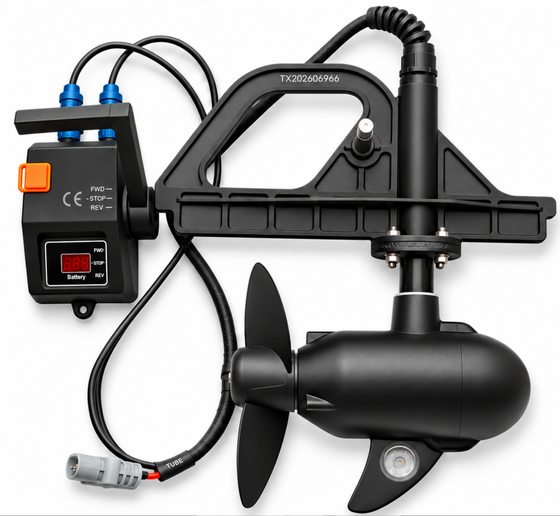
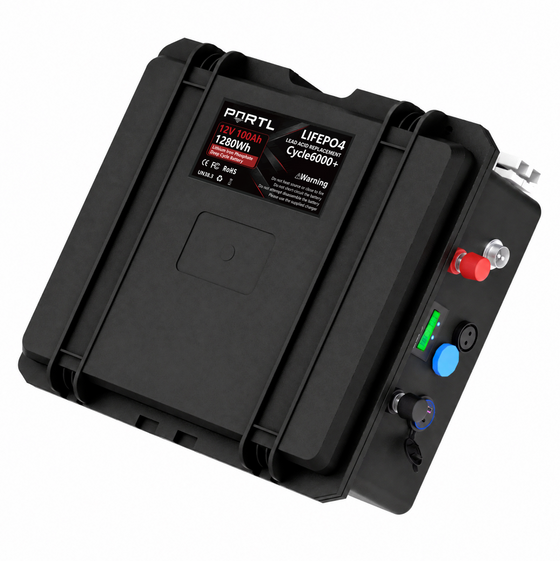
Use the section dimensions above to plan your layout. Confirm the weight of each lift and allow space for chairs, drives, paddle and fishing gear. A motor and battery add further items to carry and secure.
The listed dimensions let you compare space requirements. A confirmed vehicle fit also depends on the opening, loading path and arrangement of the complete kit.
Protect the kayak and the vehicle
Follow the kayak and vehicle manufacturers’ guidance for carrying and securing loads. Protect fittings, cables and locking points during loading. Keep loose equipment restrained and maintain the visibility and occupant space needed for safe driving. If carrying outside the vehicle, use a suitable rated system and check the relevant load requirements.
Separate the hull carefully
Use the supplied assembly and disassembly instructions. Inspect the joints and locking points, clear grit or debris and protect the mating surfaces during storage. Keep Passage sections with Passage and Odyssey sections with Odyssey. Do not force incompatible parts together.
Create a storage routine
Clean and dry the kayak and equipment as directed before putting them away. Support the sections appropriately, protect them from prolonged heat and exposure, and avoid loading weight onto fittings or distorting the hull. Store drives, motor and battery according to their own guidance.
Compare modular and portable kayaks and folding versus modular construction around your actual space.
Your questions, answered
Will the sections fit in my pickup truck with the tailgate closed?
Check the usable truck bed length with the tailgate closed, the width between obstructions and the available height. If you use a canopy, measure its loading opening and the path each rigid section must follow through it. Compare those measurements with every section in your selected Solo or Tandem, then allow space for the chairs, drives and other equipment and for securing the load. The customer examples above show individual loading arrangements; they do not confirm the fit of your pickup truck or canopy.
How should I plan space for two modular kayaks?
Two PORTL Solos have four hull sections in total; two Tandems have six. One Solo and one Tandem have five. Use the individual section dimensions above to plan where every piece will go, then add space for all chairs, drives, paddles and other equipment. These counts do not establish a combined packed size or confirm that a particular car, SUV or pickup truck can carry the complete setup.
Does a modular kayak mean I can travel without roof racks?
Separating the hull gives you shorter pieces to assess for carrying inside a vehicle. It does not guarantee an internal fit. Check the opening, complete loading route and space for every section and accessory, as well as how the load will be secured. If the complete kit cannot be accommodated appropriately inside, assess a suitable external carrying system against the kayak and vehicle guidance.
Does the assembled length tell me whether it fits in my car?
No. For a modular kayak, the individual packed sections and the loading path are the useful measurements. Include the other equipment you plan to carry.
Can I use the fit tool as a guarantee?
Treat a dimensional result as guidance based on its stated measurements and assumptions. Check your own vehicle and loading route against the listed section dimensions before relying on a fit.
Ready to narrow your choice? compare PORTL fishing kayaks, compare Passage and Odyssey or talk to James about your setup.
Check the assembly sequence before your first trip
Read the modular fishing kayak assembly guide for the joining sequence and model-specific instructions. The manual library also covers the drives and accessories you will need to carry with the hull sections.
For a routine covering the complete setup, use the fishing kayak maintenance and care checklist. It brings together after-trip cleaning, drive servicing, electrical-equipment care and storage checks.