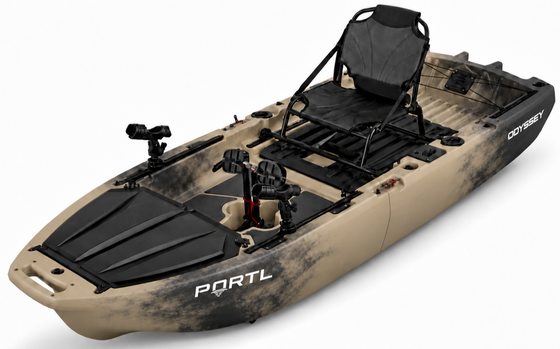
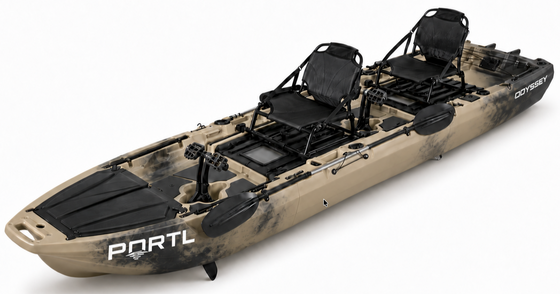
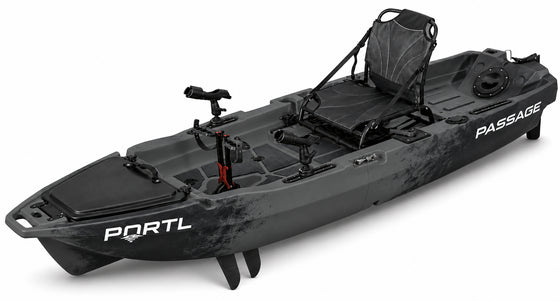
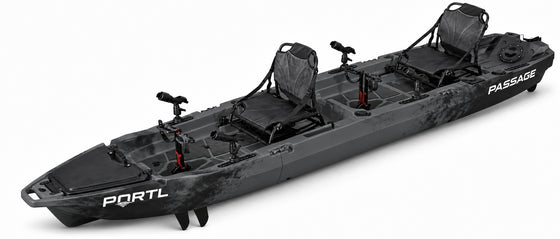
A fishing kayak, also called an angler kayak, is arranged around fishing equipment and the way you use it: seating, space for tackle, and places to carry or mount gear. Features and included equipment vary by model.
The right fishing kayak starts with your usual outing: where you launch, who joins you, what you carry and how you get the kayak home. Use those answers to compare the complete setup.
1. Match the kayak to your fishing
Describe the waterways, launch points and typical conditions you expect to use. Ask for model-specific guidance on suitability, control and the load you plan to carry. Include the weight of people, fishing gear, motor, battery and accessories when assessing a configuration. A fishing label or wide hull is not proof of suitability for every environment.
2. Choose your seating layout
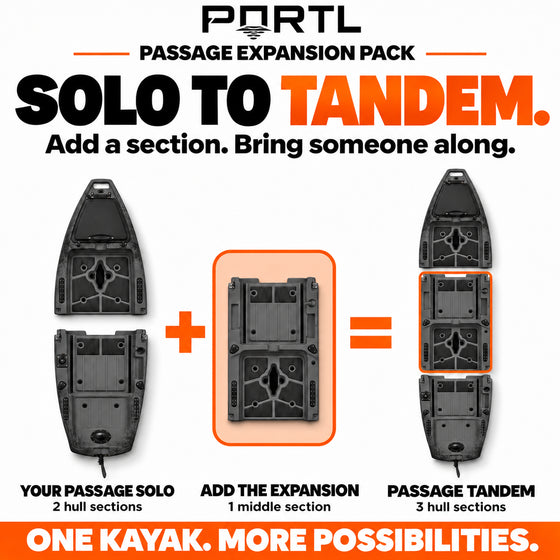
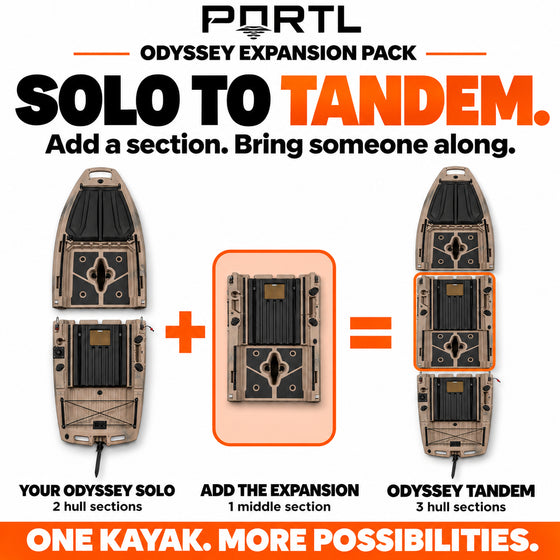
Solo gives one person their own setup. Tandem brings two seating positions into one craft. PORTL Tandems include two standard chairs and two selected pedal drives. If you may paddle alone, confirm the correct seating and trim arrangement for that specific Tandem.
You can also start with a PORTL Solo and add its model-specific expansion pack later. The middle section, standard chair and selected drive must match the Passage or Odyssey family.
3. Decide between pedal and optional electric power
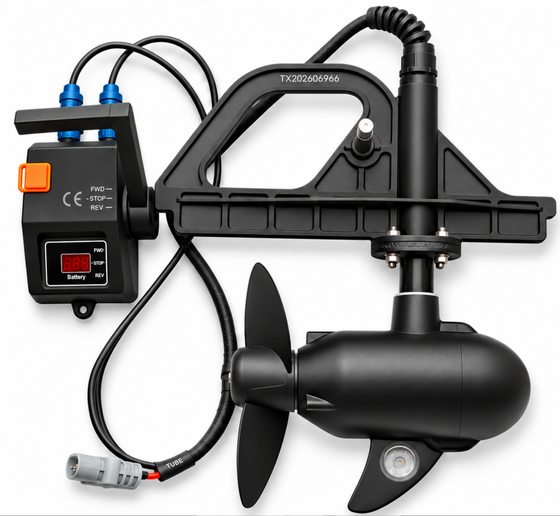
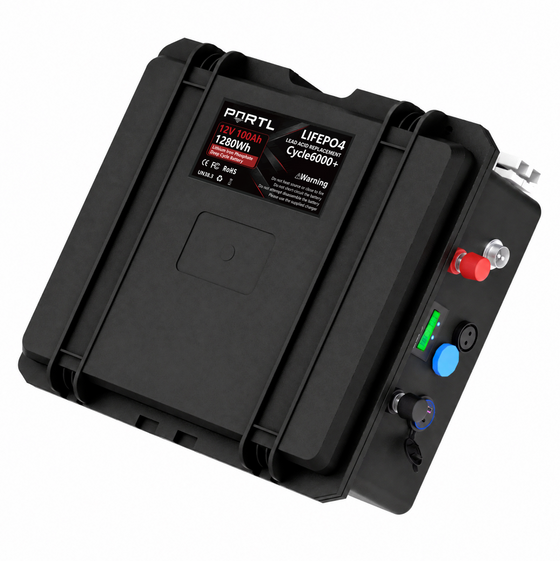
Pedals let your feet provide propulsion while you manage fishing gear. Choose fin or propeller motion around the conditions you expect and the maintenance you are prepared to do. Electric power adds a motor, electrical components and a battery to your planning. It does not remove the included pedal drives from PORTL packages.
Read the fin versus propeller guide and electric kayak setup guide before comparing total costs.
4. Check transport and storage
A modular hull separates for loading, but each section still needs to pass through your vehicle opening and fit safely inside. Measure the full loading route and account for seats, drives and fishing gear. Compare the heaviest hull section you will lift: 48.5 lb for Passage Solo, 50.7 lb for Passage Tandem, 59.5 lb for Odyssey Solo and 63.9 lb for Odyssey Tandem. These weights exclude accessories; use the section dimensions in the transport guide to check your loading route. Compare modular and portable fishing kayaks and use the transport and storage guide.
5. Compare the complete price
Compare models with the same seating and drive configuration. The current US offer includes one swivel-chair upgrade, one rod holder, one bait board and a 10-year molded-hull warranty per kayak. The swivel chair replaces one standard chair. Custom color is an optional free upgrade, normally $750 USD, in the color selector. Budget separately for a second swivel chair, optional equipment and shipping. Review the delivery estimate and returns policy before checkout.
Buying your first fishing kayak?
Write down your usual launch, who will join you, your vehicle space and the equipment you expect to carry. Use that short brief to compare two or three suitable configurations. A longer feature list is not a substitute for a setup you can transport, load and maintain.
- Check individual section weights and how you will lift them.
- Compare the same seating and pedal package across your shortlist.
- Check what the current offer includes before adding accessories.
- Confirm model suitability, compatibility and delivery timing with PORTL.
Work through the complete setup budget, weight and capacity checklist and accessory planning guide before deciding.
Check support before choosing your kayak
Ask how you will look after the exact kayak and drive you are buying, not just what arrives in the package. Keep the model and drive name with your records so that a later parts inquiry identifies the right equipment.
- Instructions: find the assembly and care instructions for your hull, selected drive and any motor or battery. Check whether they explain the work you expect to do yourself.
- Replacement parts: ask which part fits your model, what information is needed to identify it and its current availability. A similar-looking fitting or another brand’s drive is not confirmation of compatibility.
- Warranty and returns: read the current coverage, exclusions and claim process before ordering. Check the terms for the hull and other equipment separately rather than comparing only a headline warranty length.
For PORTL, start with the assembly and user manuals, maintenance guide, current warranty and returns policy. Ask about your exact model and part if an answer is missing.
Compare your fishing kayak shortlist
Use the same questions for every kayak you consider. Record the answer for the exact model and package, rather than comparing a bare hull with a fully equipped pedal kayak.
| Decision | What to record | Where to check PORTL |
|---|---|---|
| One angler or two? | Seats, included drives and equipment for each person; compare a Tandem with two complete Solo setups. | Solo and Tandem comparison |
| Can I move the complete kit? | Heaviest individual lift, every section's dimensions, loading route and space for removable equipment. | Transport measurements and US vehicle measuring guide |
| What will I carry on the water? | People, fishing equipment, motor, battery, ice and catch; check the model's rated load and suitability. | Weight and capacity guide |
| Which propulsion suits my routine? | Pedal motion, steering, clearance, removal and maintenance requirements. | Pedal versus paddle and fin versus propeller |
| What is the complete cost? | Selected package, extras not already included, transport equipment and delivery to your ZIP code. | US kayak pricing guide |
| Can I maintain it? | Assembly instructions, cleaning routine, service requirements and access to replacement parts. | Manual library and care checklist |
If an answer is missing, ask for it before comparing totals. Send PORTL your preferred model, drive, vehicle measurements and delivery ZIP code so the advice can address your actual setup.
See existing customer setups
Use the existing customer photos and reviews alongside the specifications when making your shortlist:
- Odyssey Solo customer photos and reviews: Ethan Mitchel describes carrying his setup in a pickup truck, and Brian Thompson shares his experience of setup and stability.
- Odyssey Tandem customer photos and reviews: see Joe Campbell and Liam Parker's individual setups and experiences.
These examples concern the named customers' Odyssey setups. They are not a matched Passage-versus-Odyssey test, a measurement of performance or proof that a kayak will fit your vehicle. Check the exact model, equipment and your own loading measurements before drawing a conclusion.
Your questions, answered
How should I compare fishing kayak reviews and “best kayak” lists?
Check the exact model, model year and configuration being reviewed. Record whether the price includes the drive, seating, accessories and delivery, and whether a quoted weight is hull-only or fully equipped. A review of a different size or drive package may not answer your question.
Look for a clear explanation of how the kayak was assessed, the conditions used and any limitations. Separate the reviewer’s experience from manufacturer specifications and retailer recommendations. Use the shortlist checklist above to compare the same details across your options. This guide explains buying decisions and the PORTL range; it is not an independent test of competing brands.
Is a more expensive fishing kayak always better for me?
No. Compare suitability, inclusions, transport requirements, support and total setup cost. Features that do not help your own outings may add cost or weight without solving your problem.
Do I need a roof rack for a modular kayak?
It depends on the actual packed sections and your vehicle. Some setups may travel inside a suitable car, while others still need another transport arrangement. Measure before relying on an inside-car fit.
Ready to narrow your choice? compare PORTL fishing kayaks, compare Passage and Odyssey or talk to James about your setup.
What is the best fishing kayak for your priorities?
The best fishing kayak for you is the one that suits your load, transport and fishing routine. Start with the constraint you cannot change, such as the weight you can lift or the opening of your car, then compare the features you want.
- A smaller individual lift: Passage Solo has a listed heaviest hull section of 48.5 lb, compared with 59.5 lb for Odyssey Solo. Include the seats, drive and other equipment in your transport plan.
- Dedicated catch storage: compare Odyssey Solo and Tandem. Solo has one 57-liter under-seat fish-storage cabin; Tandem has two. Stored gear, ice and catch still count towards the load.
- Fishing with another person: compare the two Tandems for seating, load and the three sections you need to carry. Two Solo kayaks give each person a separate craft but mean managing two complete setups.
- Foot-powered propulsion: compare the pedal fishing kayak packages and the operating requirements of each drive.
This guide compares the Passage and Odyssey fishing kayaks. Use the Passage and Odyssey comparison to check the full specifications, then view the fishing kayak range.
Set up your first fishing kayak
Once you have chosen a model, work through the beginner fishing kayak setup checklist to plan your inclusions, assembly, accessory layout and transport before your first outing.
For the full set of comparisons and ownership guides, visit the PORTL fishing kayak guide library.